Lord Byron arrived in Sintra in 1809 and declared it a glorious Eden. He was not exaggerating, and he also, apparently, had excellent skin for someone who spent that much time outdoors in Atlantic weather.
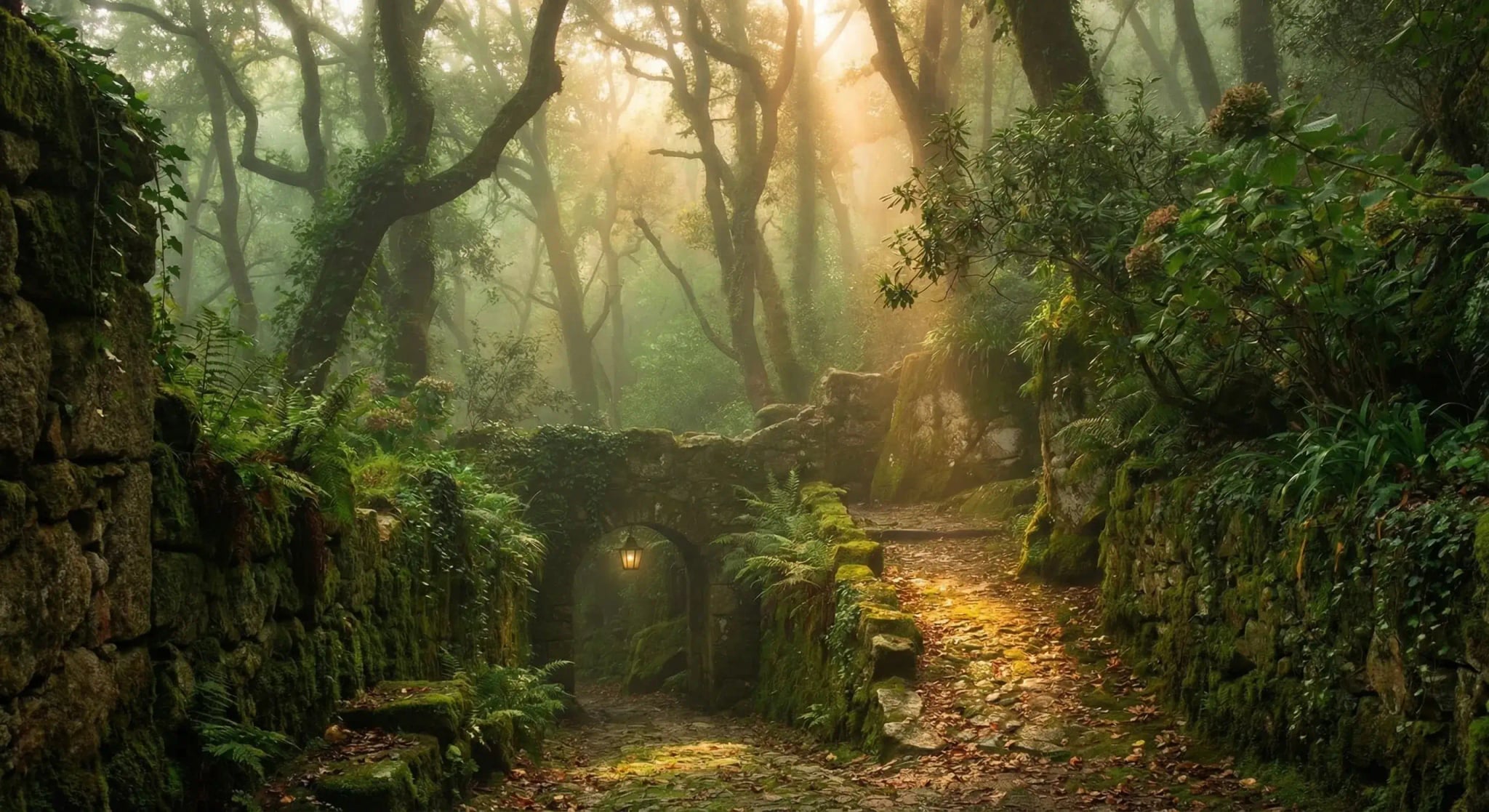
Sintra does this to people. It arrives so completely — the mist sitting in the pines, the palace towers visible above the treeline, the particular silence of somewhere that has been significant for a very long time — that the practical questions about SPF and humidity and what to do with your hair tend to recede. Then you spend a day in it and they come back.
The Serra Makes Its Own Weather
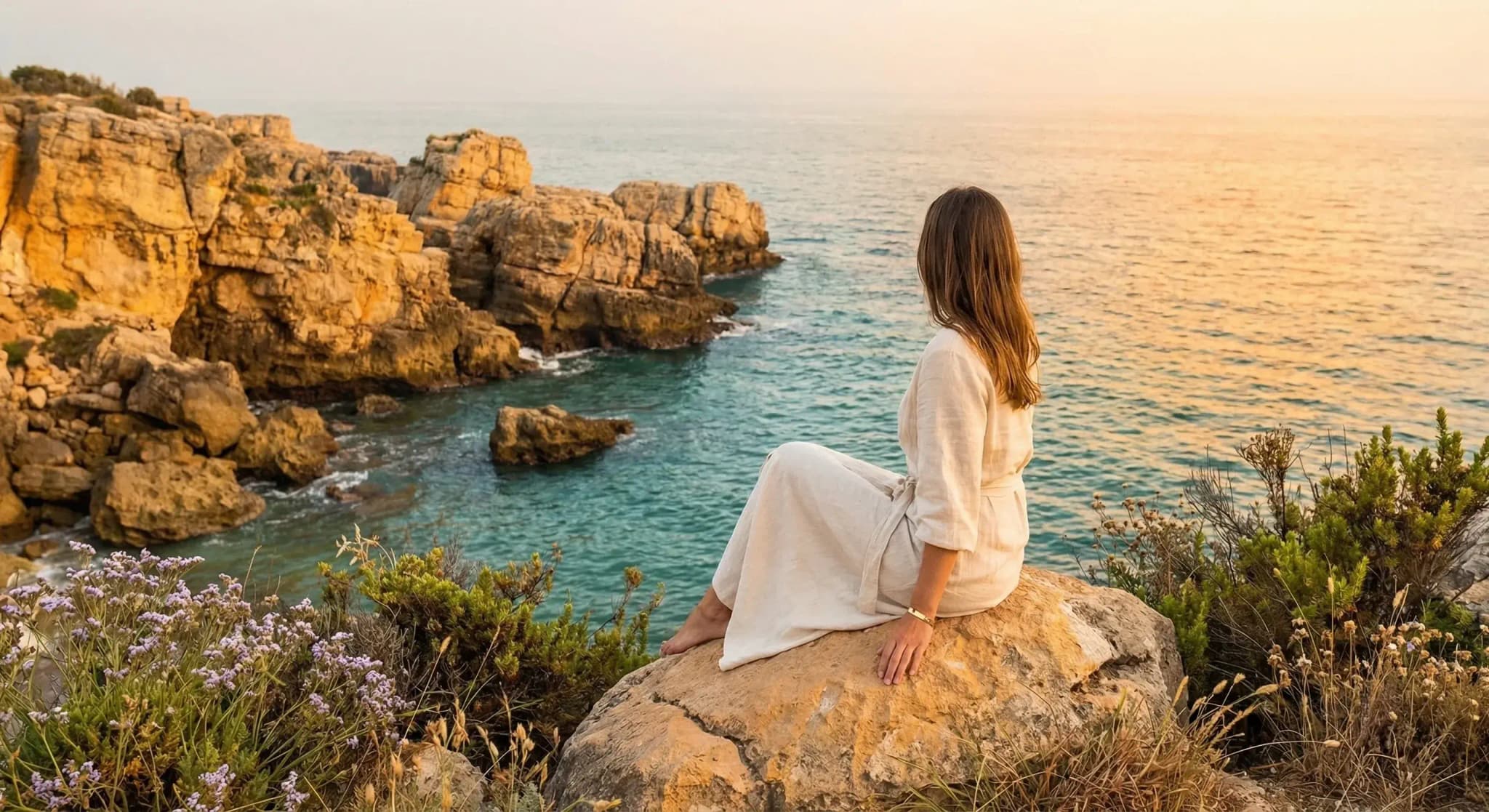
This is not metaphor. Sintra sits in the Serra de Sintra, a granite range that intercepts the Atlantic airflow before it reaches Lisbon. The result is a microclimate that diverges significantly from the city thirty kilometres east: more moisture, more mist in the mornings, more unpredictable afternoons. In summer, a day that begins at Pena Palace in soft cloud can end at the Estoril coast in sharp sun. In April — the week of Easter, the start of the bridal season, the beginning of serious tourism — the light here is extraordinary and the damp is constant.
For your skin, this is both a gift and a challenge.
The gift: Atlantic moisture in the air is not the same as urban humidity. It doesn't carry the particulate matter of the city, and the ionised air off the Serra is genuinely kind to sensitive and reactive skin. Some clients find that they require less product in Sintra — the air itself is doing some of the work.
The challenge: Moisture is not the same as hydration. The mist and damp can compromise the skin barrier over time, particularly the lip area and the corners of the eyes. Cold mountain air in autumn and winter strips ceramides efficiently. A ceramide-rich moisturiser applied before exposure, rather than after, addresses this preventively. So does a facial oil over your regular SPF on days when the weather forecast says partly cloudy and means anything could happen.
The SPF question in Sintra deserves its own sentence: the altitude increases UV exposure, cloud cover creates a false sense of security, and the reflective quality of the town's white-washed walls and the light off the Tagus estuary visible from the upper palaces means you're receiving more than you think. Use a mineral SPF 50 and reapply. The locals who have been here for decades have learned this the hard way.
Hair in the Serra
Sintra is, hair-wise, a humidity environment. Not catastrophically so — it is not Cascais on a blown-in day — but consistently so in a way that requires a considered approach rather than a reactive one.
For fine hair: The moisture swells the cuticle and adds volume, which is not necessarily unwelcome, but it also accelerates frizz from the mid-afternoon onwards. A small amount of hold-type product applied to damp hair before any styling will keep the structure you want. Anti-humidity sprays are genuinely useful here; they are not marketing.
For textured and coily hair: The Serra's moisture tends to work with rather than against natural texture, but the temperature swings between shaded valleys and exposed hilltops — sometimes ten degrees in twenty minutes — create shrinkage conditions that can be pronounced. Seal with an oil before outdoor time. A satin-lined hair accessory for the walk between sites is not an overreaction.
For colour-treated hair: The combination of higher UV at altitude and frequent mist creates fade conditions. A colour-protective leave-in is worth applying before any extended outdoor day. If you're in Sintra for a wedding or an event — the Serra quintas host many — book a professional treatment before arrival rather than managing the aftermath.
The hairdressers in Sintra town itself are excellent at managing local hair in local conditions. They also have waiting lists. For visitors needing same-day or on-location service, we can arrange practitioners to come to your quinta, hotel, or pousada. The request lead time for Sintra appointments is longer than for central Lisbon — the logistics require it — so advance notice matters.
Weddings and Quintas
Sintra's quinta weddings are among the most photographed events on the Portuguese social calendar. Quinta da Regaleira, Monserrate, the various private estates hidden behind stone walls on the Colares road — they produce images that circulate for years because the setting is genuinely extraordinary. The light in the Serra on a June morning, bounced off stone and filtered through eucalyptus, is the kind of light that makes most professionals look better at their jobs.
It also has particular demands.
The primary challenge is the transition between states: outdoor ceremony in Serra light, then interior reception in candlelight, then the outdoor terrace again as the evening cools. Each condition rewards something different. For bridal makeup, the approach we recommend is one that photographs as natural in morning light and holds its structure through the humidity of dancing in a converted stone barn at midnight.
For this, the application method matters as much as the product. A professional — not just skilled, but specifically experienced with these venues and this light — makes the difference between makeup that looks beautiful at 6 PM and makeup that has migrated by 9 PM. Good Hands maintains a roster of practitioners who have worked multiple Serra weddings and understand what hold means in this microclimate.
Bridal bookings in Sintra carry a longer lead time than Lisbon — typically six to twelve weeks for significant events during peak season (May through September). We request as much notice as possible.
The Quinta Resident and the Day Visitor
Sintra has two distinct populations during the warmer months: people who are staying (in villas, quintas, converted manor hotels — the accommodation here tends to the remarkable) and people who have come from Lisbon or further for the day. Their beauty needs diverge considerably.
Day visitors are typically on a compressed schedule: Pena Palace before the coaches arrive, the town centre for lunch, Quinta da Regaleira in the afternoon. For this, the skin and hair preparation should happen before leaving Lisbon. Bring whatever you'll need in a small kit — SPF, touch-up powder, a hydrating mist for mid-afternoon. The mist with a few drops of facial oil will address both the atmospheric dryness of the altitude and the shine that comes with any significant uphill walking.
Quinta residents have the freedom of rhythm. They can schedule treatments for mornings before the sites fill up, or for late afternoons when the light becomes the thing itself. Sintra in the early evening, with the palaces illuminated, the mist coming down from the Serra and the gardens going from gold to blue, rewards skin that has been looked after. It is the kind of place where the effort makes sense.
A Practical Note
The distances in Sintra are deceptive. The map looks compact; the reality involves significant gradient changes, cobbled surfaces, and the kind of walking that is genuinely restorative but does require sensible shoes and a realistic assessment of your blister tolerance.
For beauty appointments in Sintra, we work across the town centre, the Colares road quintas, and the coastal properties towards Azenhas do Mar. All services are on-site — we come to you. This is not a convenience offering; it is the only arrangement that makes sense in a place where the distances between where you are staying and the nearest salon can involve a twenty-minute drive on mountain roads.
To request a service in Sintra or the surrounding Serra, use the form at /book and specify your property name and preferred timing. We'll respond within 24 hours with options.
Good Hands serves clients across Sintra, the Serra de Sintra, Colares, Azenhas do Mar, and the Estoril coast. Request a service at beautysalonlisbon.com/book.