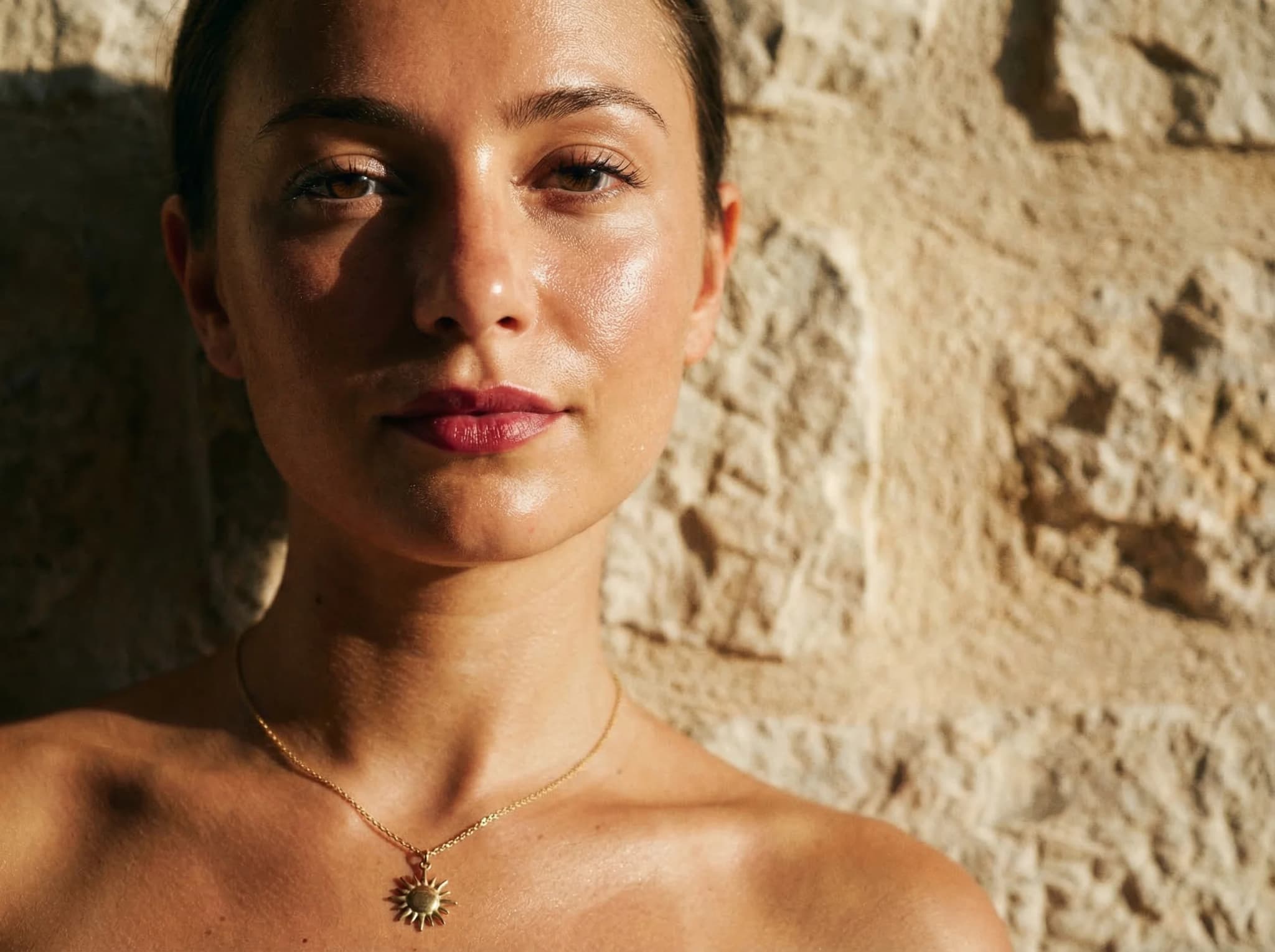
There is a particular moment, sometime in the second week of May, when Lisbon changes register. The light becomes less polite. It no longer slants — it arrives at full strength, early, and stays. The café terraces fill. The city starts running on the compressed social schedule that Lisboetas call summer and visitors simply call astonishing.
This is when the practical questions about your skin, your hair, and your overall appearance become more urgent. Not because looking good matters more in summer — it matters equally all year — but because the conditions stop being lenient. Atlantic winter light is forgiving. June in Lisbon is not.
Here's what you need to know.
The Light Problem
Lisbon sits at 38 degrees north, roughly the same latitude as San Francisco or Seville. Its summers are intensified by the Tagus basin, which concentrates heat, and by the particular quality of the reflected light from both the river and the limestone and azulejo of the city's facades. You are dealing with direct UV, heat-amplified UV, and scattered reflected light simultaneously.
The UV Index in Lisbon peaks at 10–11 (Very High to Extreme) from June through August. This is the same range as coastal Spain and southern Italy. Treatments calibrated for northern European climates — or even for Lisbon's mild winter — will not hold up without adjustment.
For your skin, this means:
- SPF 50+ is the minimum, not the premium option. SPF 30, which protects adequately in London or Paris, is underperforming here. A broad-spectrum SPF 50 applied properly — and reapplied after sweating or swimming — is the baseline.
- Morning application is not enough. If you are outside from 11am to 4pm (which is when you will be, because the city is at its most beautiful), you need to reapply. The best system is a compact mineral SPF that goes over makeup cleanly. Powder SPF products have improved dramatically in the past two years and are worth investigating before the season starts.
- The neck and chest need the same attention as the face. Lisbon's summer dress code exposes both. Décolletage hyperpigmentation is one of the most common presentations we see in new clients arriving in June and July — invariably from inadequate SPF through May.
Heat and Skin Type
Summer in Lisbon does not affect all skin types equally.
Oily and combination skin will find June and July challenging — not because the heat is extreme by global standards, but because the combination of strong sun, ambient heat, and social activity (outdoor dinners, late evenings, festivals) extends wear time well beyond what the face was designed to handle in a single application. Blotting products, lighter formulas in the daytime, and a proper double cleanse at night become essential rather than optional.
Dry and sensitive skin often does better in summer than expected — the warmer temperatures genuinely help — but the key risk is dehydration from air conditioning in shops, restaurants, and Uber rides alternating with the open heat. A hyaluronic serum in the morning, under moisturiser and SPF, handles this well.
Reactive skin needs to be especially careful with the June transition. The shift from the softer Atlantic spring light to full summer intensity can trigger redness and sensitivity in skin that was well-behaved all winter. A gradual increase in SPF from early May gives the skin time to adapt. A course of vitamin C — a well-formulated ascorbic acid, not the cosmetic-grade derivative products — supports the skin through the photoadaptation.
The Festival Season: Santo António and Beyond
June 13th is Santo António, Lisbon's major summer festival and the city's unofficial carnival. The Marcha Popular parades through Alfama. Street parties run through the night in the historic neighbourhoods. If you are in Lisbon for it — and it is worth being in Lisbon for it — you will be outdoors, in warmth, moving, for significantly longer than a conventional evening.
What this means for beauty prep:
A full setting routine is essential — not optional — for Santo António. Primer designed for humidity and warmth, a setting spray after makeup application, and a touch-up kit in your bag. Waterproof mascara is obvious; less obvious is that waterproof eyeliner performs significantly better than pencil in these conditions, and that any product with a strong fragrance will perform worse under heat stress than it does in normal conditions.
Hair at Santo António is a particular challenge. The city turns humid late on June evenings — Atlantic air, heat, crowds. Smooth styles work, up-styles with a good hold product work, and elaborate blowouts do not work unless they are protected. Plan accordingly.
The bridal season runs hard from June through September, with July and August peaks corresponding to destination wedding traffic from Northern Europe and the US. If you have a wedding (as a guest, as a member of a bridal party, or as the person getting married), May and early June are when to finalise your beauty plan. The lead times for wedding makeup and bridal hair become tighter as the season advances. Booking in May gives you the full range of choices. Booking in late June means working around availability.
Hair in the Lisbon Summer
Lisbon's summer is described as dry, and atmospherically this is true compared to the Atlantic winter. If you're looking for professional on-location hair styling that handles these conditions, our hair specialists are trained in summer-specific techniques. But the coastal influence never disappears entirely — the Nortada, the northern wind that cools the city in summer, carries moisture, and the Tagus estuary maintains a lower humidity floor than, say, Madrid or Seville.
For hair, the practical reality is:
Colour-treated hair needs protection from the sun. UV filtration products for hair exist, work well, and are still underused. A leave-in with UV filter is the minimum; a lightweight oil with UV blockers is better for thicker or drier hair. Colour treated in winter will be a significantly different shade by September without protection.
Texture hair and curls handle Lisbon's summer well, with proper moisture management. The combination of lower urban pollution compared to Northern European capitals, moderate humidity (rather than the extreme humidity of southern US or Southeast Asia), and good light means curl pattern often improves from spring through summer. The main risk is over-product buildup from defence products applied daily — a clarifying wash every 7–10 days prevents this.
Fine hair in Lisbon's summer responds well to volume-focused, lighter products. The reduced winter damp that collapses fine hair eases off significantly by May. Treatments aimed at body and root lift become more effective, and the blowout that falls flat in February holds considerably better in July.
What to Book Before Summer
A few treatments work better done before the season than during it:
A proper SPF review with your skincare professional. Not all SPF products perform identically in Mediterranean sun conditions. A session in May — reviewing your current routine, trialling products on your actual skin, understanding layering — is more valuable than buying something new at the airport in June.
A hair treatment appointment in May. Summer puts colour, texture, and condition under sustained pressure. Starting the season with an Olaplex or bond-repair treatment, a professional colour refresh (if relevant), and a clear plan for at-home maintenance means you are managing summer rather than recovering from it.
A makeup consultation for the festival season. If you are attending events in June and July — and Lisbon has a serious event calendar from the Festas de Lisboa through to the summer gallery and restaurant openings — a session with a Good Hands makeup artist before the season is useful. Understanding what formulas hold in your specific conditions, what your personal summer palette looks like, and having a professional opinion on technique saves significant time and money versus troubleshooting in real time.
Good Hands travels to wherever you are in Lisbon, Cascais, or Sintra. Summer season booking opens earlier than you think — if June or July is on your calendar, now is the right time to reach out.