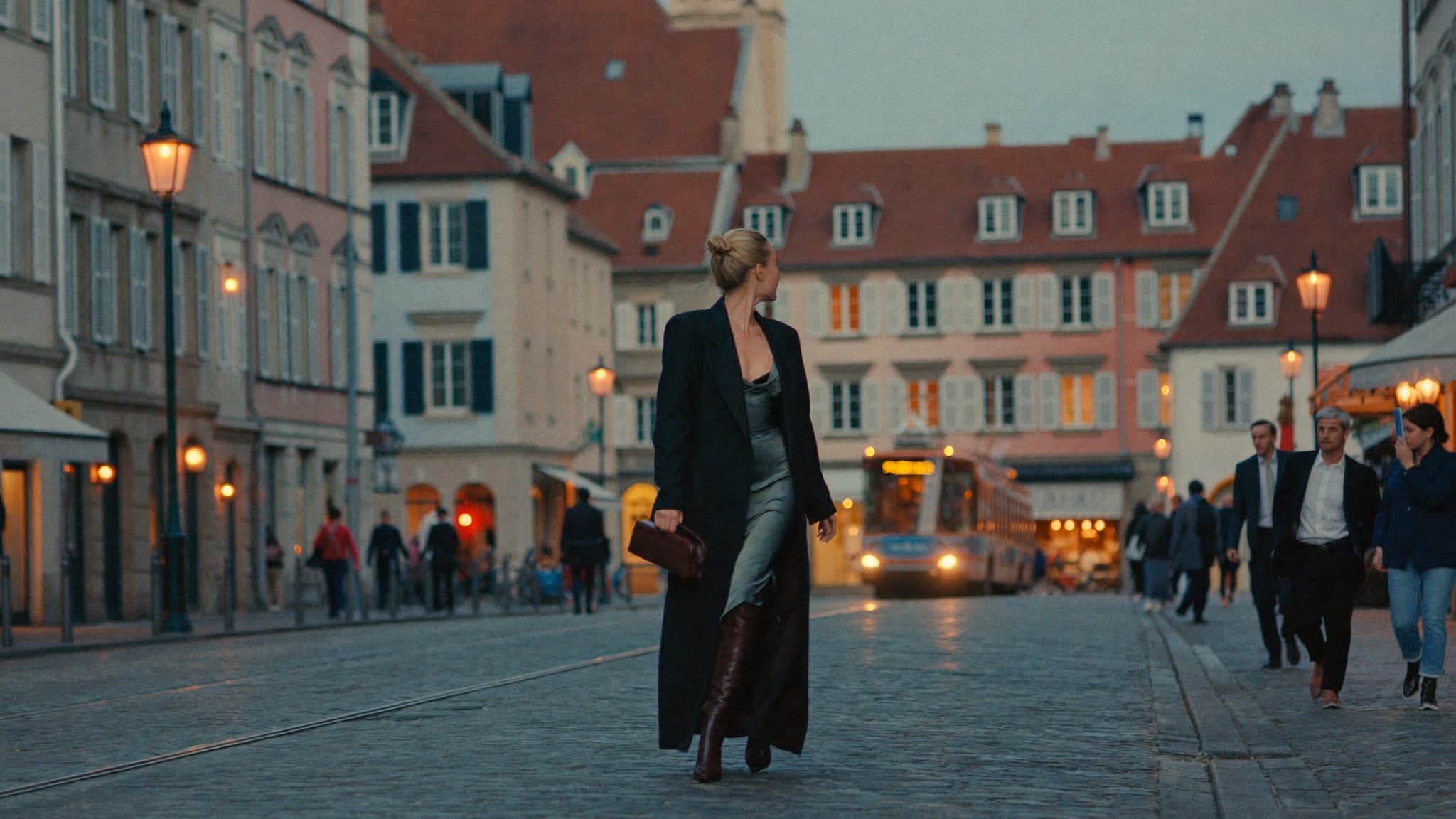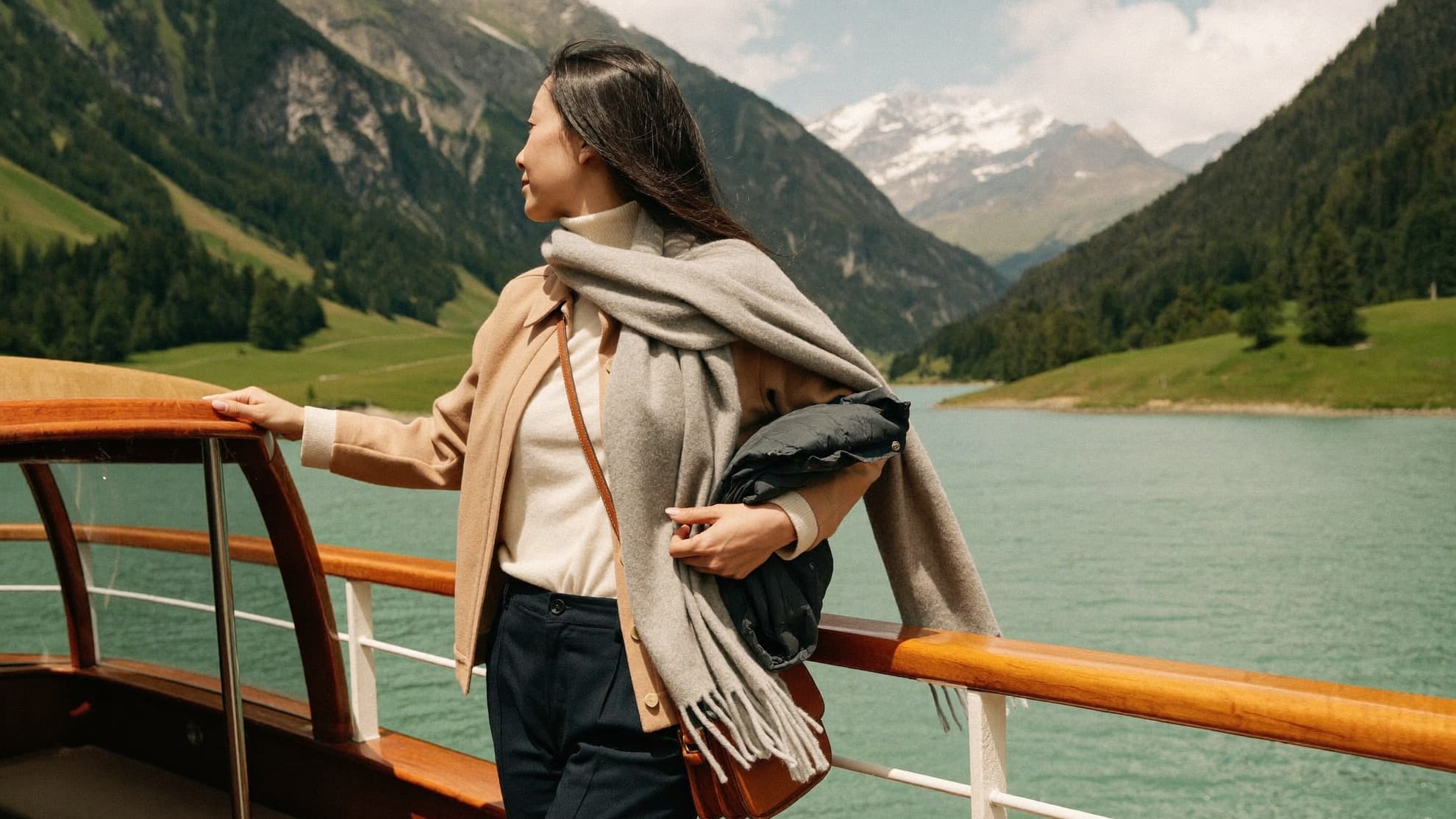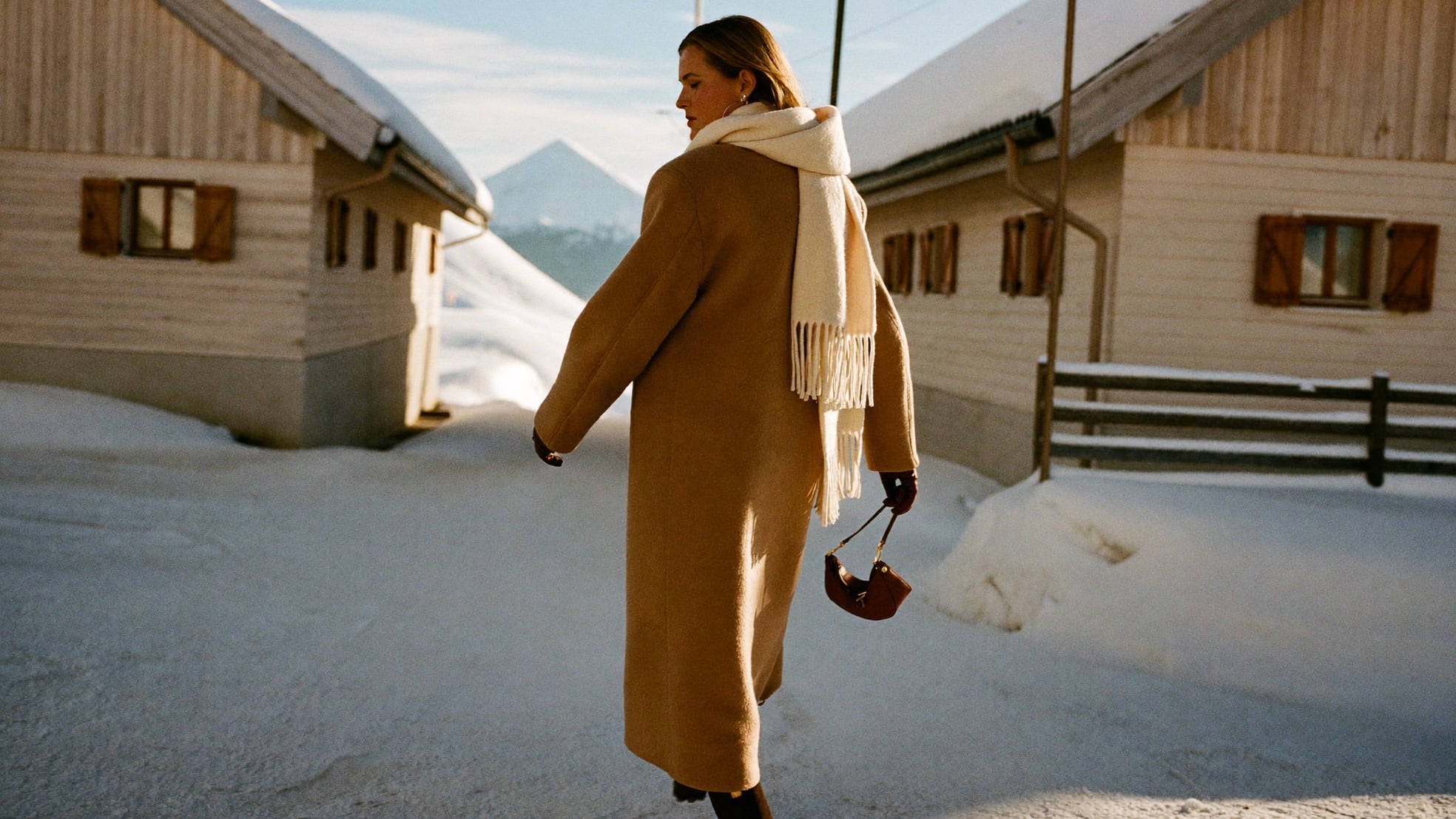
Zermatt sits at just over 1,600 metres, at the closed end of a Valais valley, with the Matterhorn at the head of it. You arrive by train. Vehicles with combustion engines are not permitted in the village, so cars are left down the valley in Täsch and the last stretch is done on the shuttle. What you notice first on the platform is the absence of engine noise: electric taxis, luggage carts, hooves in winter, and the river running under the main street.
That quiet is the part people describe afterwards. The part they tend not to describe is what the air is doing while they enjoy it. Alpine air at this elevation is thin, cold and very dry, and the light that comes with it is considerably stronger than the temperature suggests. Skin registers the change within about a day. Hair takes a little longer, then stays difficult for longer.
None of this is a reason to pack differently out of anxiety. It is a reason to pack differently on purpose.
The Light, Not the Cold, Is the First Problem
Ultraviolet exposure rises by roughly 10 per cent for every 1,000 metres of elevation, according to the World Health Organization. The village already sits above that first threshold. The lifts take you a good deal further: the viewing platform at Matterhorn Glacier Paradise stands at 3,883 metres, which its operator describes as the highest in Europe.
Snow compounds it. Fresh snow reflects a large share of the ultraviolet radiation that lands on it, with figures up to 80 per cent commonly cited. The practical consequence is that you are lit from two directions at once, and the second dose arrives at the places sunscreen is most reliably skipped. Under the jaw. The underside of the nose. The lower lip. The strip of neck above a collar. People come off the mountain burned in a pattern that makes no sense until you work out where the light was coming from.
The protocol:
- SPF 50 on the face every day you go up, applied indoors before you dress, not on a chairlift with gloves on.
- Deliberately cover the reflected zones: under the chin and jaw, the underside of the nose, the ears, and the neck.
- A high-protection lip balm with SPF, reapplied at every lift stop. Lips have no melanin worth speaking of and they are directly in the path of upward-reflected light.
- Reapply at lunch. This is the only realistic reapplication window on a ski day, so treat it as fixed rather than optional.
- Sunglasses or goggles with proper UV filtering, worn on the walk to the lift and not only on the piste. The skin around the eyes thins early and the squint lines that come from a week of bright snow are the ones people notice later.
Overcast days are not a reprieve. Cloud scatters ultraviolet light rather than removing it, and on a grey day at altitude the temptation to skip sunscreen is much higher than on a bright one.
Cold Air Outside, Dry Heat Inside
The second insult is the swing. Alpine cold holds very little moisture. Interiors in a ski village are heated hard, which strips out what moisture remains. Over a week you move between those two states perhaps a dozen times a day, and the barrier gives up somewhere around day three: tightness first, then flaking at the nose and the brow, then a general dullness that foundation makes more obvious rather than less.
What to change:
- Move up a texture. If you use a lotion at home, use a cream. If you use a cream, use a balm at night.
- Look for occlusive ingredients rather than only humectants. Squalane, shea butter, ceramides and, at night, a petrolatum-based balm on the driest areas. Humectants alone can work against you in genuinely dry air, because there is less ambient moisture for them to draw on.
- Layer hydration onto damp skin. A hyaluronic serum applied to a face still wet from cleansing, sealed immediately with your moisturiser, holds far better than the same serum on dry skin.
- Retire the strong actives for the trip. High-strength retinoids and acids on a compromised barrier under alpine ultraviolet light is a combination that produces sensitivity rather than results. Resume at home.
- A humidifier in the room if the hotel will provide one. Many will. It makes a measurable difference to how your skin looks on the fourth morning.
Hair Above the Tree Line
Dry air, static, a hat on for eight hours, and a helmet on top of that. Alpine hair problems are mechanical as much as environmental.
The friction line where a helmet or hat sits is where breakage appears, and it appears faster on colour-treated hair. A leave-in conditioner applied in the morning gives the hair shaft something to sit against. Loose braids or a low, soft twist under the helmet reduce the tangling that later has to be brushed out, and brushing out a day's worth of helmet tangle is where most of the actual damage happens.
Wash less than you would at home. The air is not dirty and the scalp is not producing what it produces in a city summer. Two or three washes across a week, with a mask on the middle day, will leave hair in better condition than a daily wash with a lightweight conditioner.
Static is the other reliable complaint, and it is a symptom of the dry air rather than of your hair. A light oil on the mid-lengths, or simply running slightly damp hands over the surface before you go out, settles it. Anti-static sprays work; so does a silk-lined hat, if you own one.
The Parts That Get Forgotten
Hands take a beating: cold, gloves, hand sanitiser, and the repeated wetting and drying of handling snow. A thick hand balm at night under cotton gloves is unglamorous and works better than anything applied during the day.
Cuticles split in dry cold, and split cuticles are the reason a manicure looks poor by day four rather than day seven. Oil them morning and night.
Nails themselves do better with a shorter shape and something protective on them for a ski week. Long, unsupported nails and ski boots, ski gloves and luggage do not coexist well.
The Village Between Four and Seven
The car-free rule changes the texture of a Zermatt evening in a way that is easy to underestimate. There is no arriving at a restaurant door in a warm car. You walk, in snow, in whatever you are wearing, sometimes for ten or fifteen minutes. Everything you do to your face and hair at six o'clock has to survive that walk and then a heated dining room afterwards.
This argues for a specific kind of preparation rather than a more elaborate one.
What holds:
- A cream or long-wear foundation rather than a powder finish. Powder on skin that is already dehydrated and about to go into cold air will look chalky by the time you sit down.
- Cream blush and cream bronzer, set lightly and only where you need it. In dry alpine air, cream products stay put far better than they do in a humid climate.
- Eye makeup that is done properly and then left alone. Cold wind makes eyes water, so waterproof mascara and a pencil that has been set with a matching powder shadow are worth the extra minute.
- A lip that is comfortable over balm. Fully matte liquid lipstick on wind-chapped lips is a poor decision at altitude regardless of how well it photographs.
- Hair prepared with the walk in mind. A polished blow-dry that has to survive a hat is a losing proposition. Something with a bit of structure to it, or an intentional low chignon, will look better at the table.
If you are getting ready for something that matters, a wedding party, a milestone birthday, a company evening, the working assumption in a mountain village should be that professional time is limited and booked early. Small resorts have a finite number of people who do this well, and a fixed-date occasion competes with everyone else's fixed-date occasion.
What to Pack
- SPF 50 for the face, in a formula you will actually reapply
- SPF lip balm, plus a plain emollient balm for night
- A richer moisturiser than you use at home, and an occlusive balm for the driest areas
- Hyaluronic serum, applied to damp skin
- Hand balm and cuticle oil
- Leave-in conditioner and a hair mask
- Silk-lined hat or a silk scrunchie for under the helmet
- Waterproof mascara
- Cream blush and cream bronzer
- Eye drops if you wear contact lenses, which the dry air will otherwise make uncomfortable
Leave at home: your strongest retinoid, any acid peel, and mattifying primers. None of them will do what you want them to do at this elevation.
Coming Back Down
A week at altitude leaves a particular set of results. Dehydration that reads as dullness rather than dryness. A barrier that is still recovering a fortnight later. Often some new pigmentation across the cheekbones and the bridge of the nose, where reflected light concentrates. Catching that early is considerably easier than treating it in a year.
It is worth noting what the other half of a Swiss year tends to look like. A good number of people who ski in February are on the Portuguese coast by June, for a wedding, a family stretch in Cascais, or a run of work from Lisbon, and the climate reverses completely. Atlantic humidity instead of alpine dryness, and skin that arrives over-corrected for the wrong conditions. Good Hands works on location across Lisbon, Cascais and Sintra, which means the person doing your hair before dinner is someone who deals with that humidity every day rather than reading about it. For a wedding, that is a conversation worth having several months out rather than in the final week.
Good Hands is a beauty concierge based in Lisbon. We work on location, wherever you are.