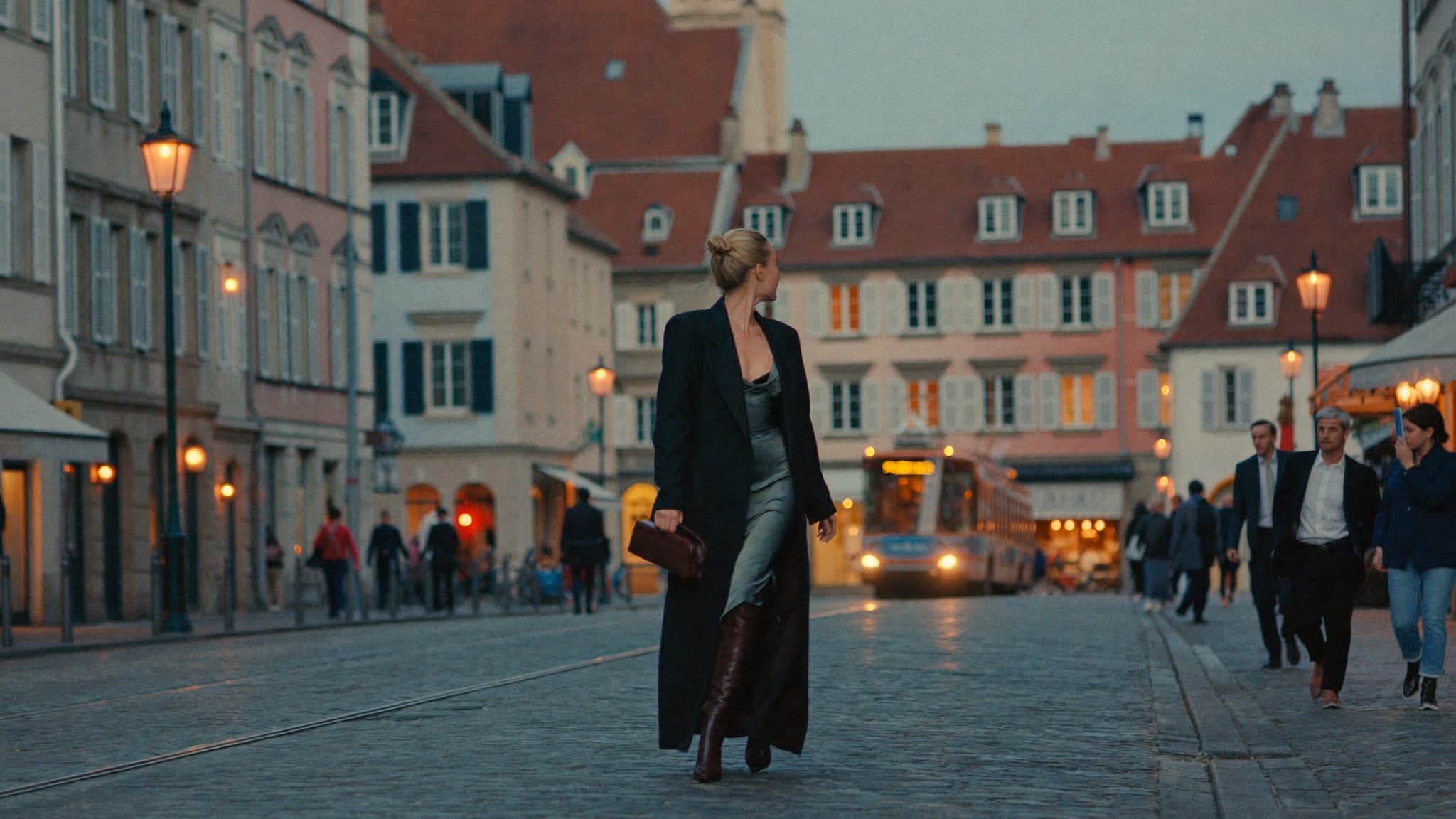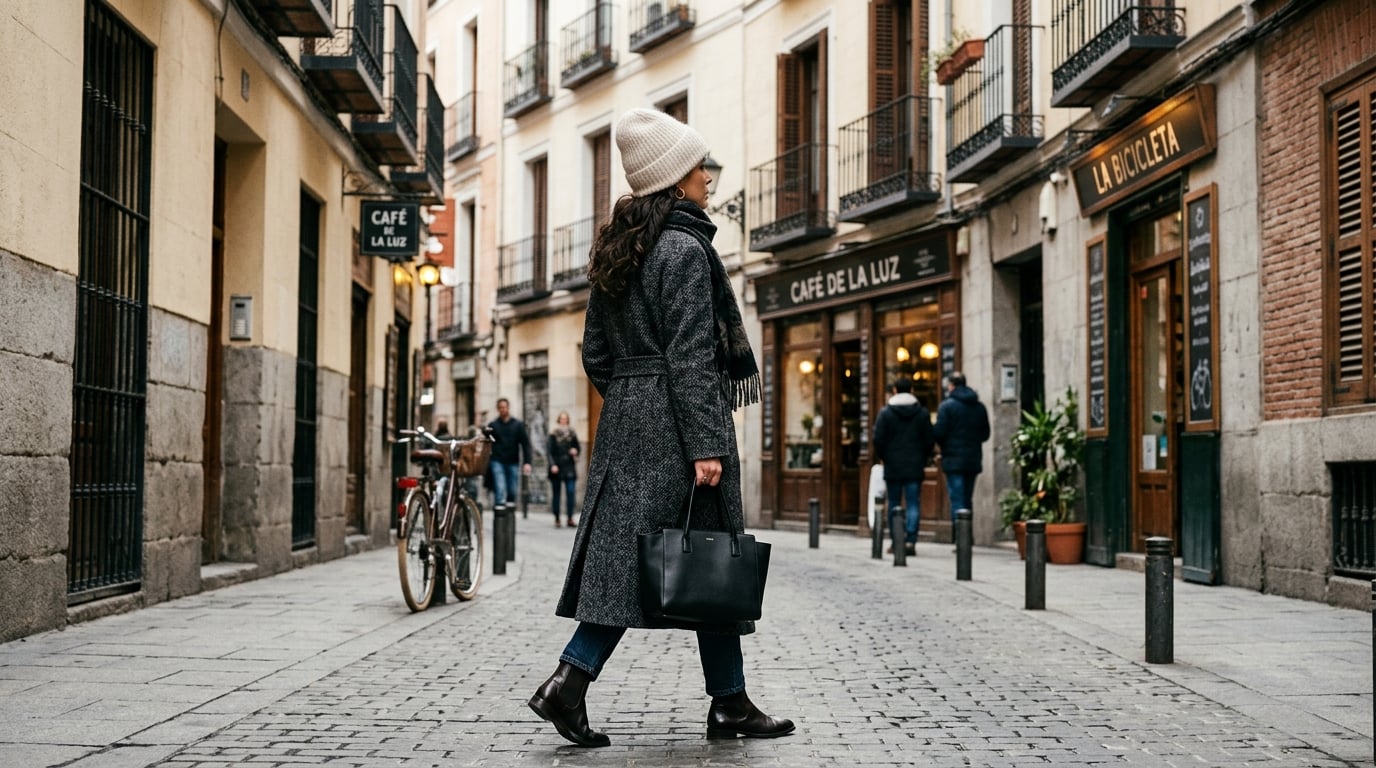
Madrid in February is not trying to seduce you. There's no soft lighting, no forgiving temperatures, no easing in. The city is bright and cold and dry and operating at full speed, and it expects you to keep up. The Prado fills with people escaping the chill. Malasaña spills onto the pavement at midnight despite temperatures that would shut down other European cities. Salamanca's wide avenues are walked fast, coats buttoned, coffee cups held with both hands. This is Madrid in its working mode — serious, stylish, and uncompromising.
Your skin in February Madrid will feel the gap between what the city asks and what the weather provides. The Spanish plateau sits at 650 metres above sea level. In winter, the air is genuinely dry — relative humidity can drop below 30%, which is lower than most indoor heating environments. This is not a beauty challenge to manage around; it's one to plan for directly.
The Central Plateau Effect
Most cold-weather travel comes with one primary insult: the temperature drop. Madrid adds a second: altitude-driven aridity. The combination of cold air outside and dry heated interiors (Madrid's buildings are well-heated, sometimes aggressively so) creates a constant tug of war on your skin barrier. You step from a heated hotel room into crisp dry air, into a heated museum, back into the cold, into a warm restaurant. Repeat for four days.
What this does, cumulatively, is deplete your skin's natural moisture without you necessarily feeling it happening — until it suddenly announces itself as tightness, flaking at the nose corners, or a dull complexion that foundation only emphasises.
The protocol:
- Swap your standard moisturiser for something with significantly higher occlusive content. Look for shea butter, squalane, or petrolatum in the ingredients.
- Apply your moisturiser before the final SPF step — and yes, SPF still matters in February Madrid. The city's elevation and high proportion of clear winter days mean UV exposure is meaningful even when it's cold.
- A facial oil layered under your moisturiser or mixed into it is not indulgence — it's what the climate demands. Rosehip, squalane, or marula are lightweight enough not to cause congestion.
- A humidifier is worth requesting from your hotel. Many business-class hotels have them available. The difference overnight is noticeable.
Lips in Madrid
This deserves its own section because the dry cold of Madrid is specifically brutal on lips. The combination of cold air, the habit of breathing through your mouth in cold weather, and wine consumption (all three will apply) means that even people who never experience chapped lips will experience them in February Madrid.
A lip barrier treatment applied before bed — not your regular lip balm, but something more intensive like a petroleum-based lip mask — will make a visible difference by morning. During the day, a tinted lip balm with SPF applied before any lip colour provides both colour and protection. Reapply after eating. Seriously, reapply after eating.
Hair in Dry Cold
The static and frizz situation in Madrid in February is specific to the climate. Dry air creates static; cold air closes the cuticle; heated rooms then open it back up. The result is hair that's simultaneously flying away and looking somehow flat, depending on where you are.
A few practical adjustments:
- Swap your shampoo for a moisturising formula while you're there, or use your regular shampoo with a hair mask conditioner instead of a standard rinse-out.
- An anti-static hair serum or a drop of hair oil smoothed over dry hair before you go out will address the flyaways without weighing down the root.
- A natural bristle brush used before styling distributes natural oils and reduces static significantly more than a plastic brush does. This is one of those tools worth packing.
- If you wash your hair in the morning, give it more time than usual to dry — going out with damp hair in Madrid in February is asking for cold-related frizz and potential scalp sensitivity.
Makeup for Madrid's Light
February light in Madrid is extraordinary in a particular way — it's cold and clear and very direct. There's no haze, no moisture diffusion; the winter sun cuts sharp shadows and reveals texture with brutal precision. This is not flattering light in the way golden hour is flattering light. It's honest light. It will expose unblended foundation edges, dry patches, mascara flakes.
What works:
- A hydrating primer as your base layer. Not a mattifying one — the dry air will take care of any excess shine.
- A serum foundation or skin tint applied with fingers for seamless blending. In winter light, less coverage blended perfectly reads better than full coverage with edges.
- Cream formulas over powder for blush and bronzer — powders tend to sit in dry patches and emphasise texture.
- A setting spray rather than a pressed powder for finish. The spray sets without drying; pressed powder on already-dry skin in dry-air conditions can look chalky by midday.
The Madrid Schedule and Your Skin
Part of what makes Madrid in February challenging beauty-wise is the schedule. The city runs late — dinner rarely before 9pm, which in practice means you're having it at 10pm. Museums are best visited in the late afternoon when the morning crowds have thinned. Malasaña comes alive well after midnight. This is not a city that rewards early-to-bed discipline.
The result for skin: you're sleeping less and doing more, which shows. A vitamin C serum applied in the morning will help with dullness and uneven tone from disrupted sleep. An eye cream with caffeine is legitimately useful rather than cosmetic in this context.
Carry a small pouch for daytime touch-ups — in Madrid you'll move from the Prado to coffee to the Retiro to dinner without returning to your hotel. Include: a small SPF stick for reapplication, your lip treatment, a hydrating mist, and a travel-size cream blush for post-Prado warmth.
What to Pack
- A rich moisturiser (occlusive, not just hydrating)
- Facial oil (rosehip, squalane, or marula)
- SPF 30+ for daily use
- Intensive lip mask for nighttime use
- Tinted lip balm with SPF for daytime
- Anti-static hair serum or light hair oil
- Hydrating primer
- Setting spray
- Vitamin C serum
- Eye cream
Salamanca, Malasaña, and Looking the Part
Madrid's neighbourhoods have their own dress codes, loosely understood but clearly felt. Salamanca is polished — clean lines, good coats, heels that make a statement on marble floors. Malasaña is creative and intentional in its seeming carelessness. The Barrio de las Letras is literary and layered. None of these neighbourhoods particularly rewards overdone makeup — Madrid style tends toward the precise and unfussy. A well-cared-for skin, a strong brow, a good lip colour. Everything else is optional.
When you're back in Lisbon and your skin is still recovering from Madrid's dry air, the contrast with Portugal's Atlantic humidity is usually a relief. But the transition — arriving home from a particularly drying trip and wanting to reset properly — is one of those moments when a professional treatment makes more sense than a week of self-administered recovery.
Good Hands is an on-location hair and makeup service based in Lisbon. We come to you.